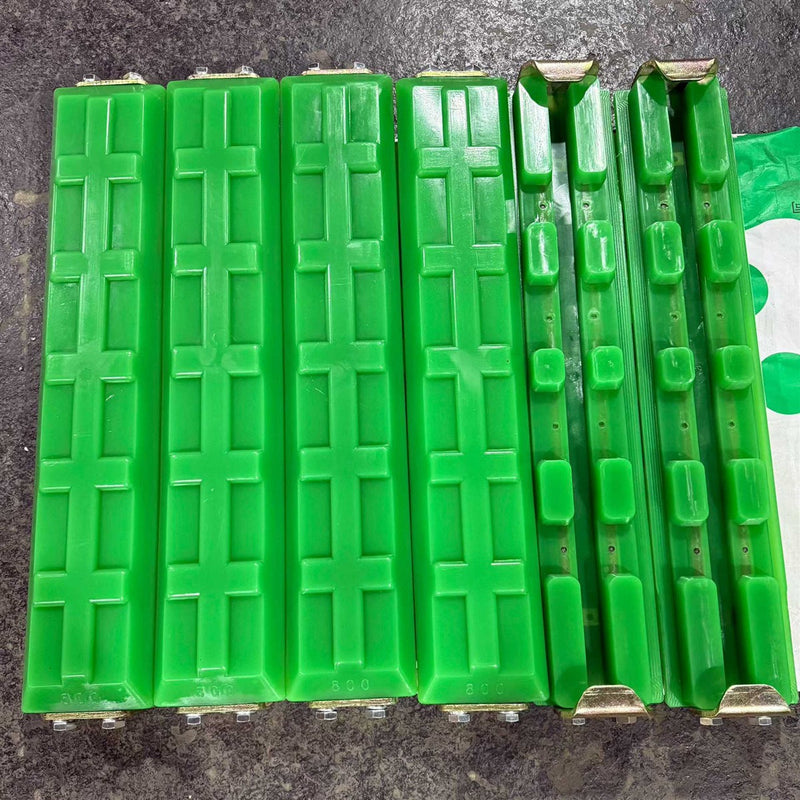
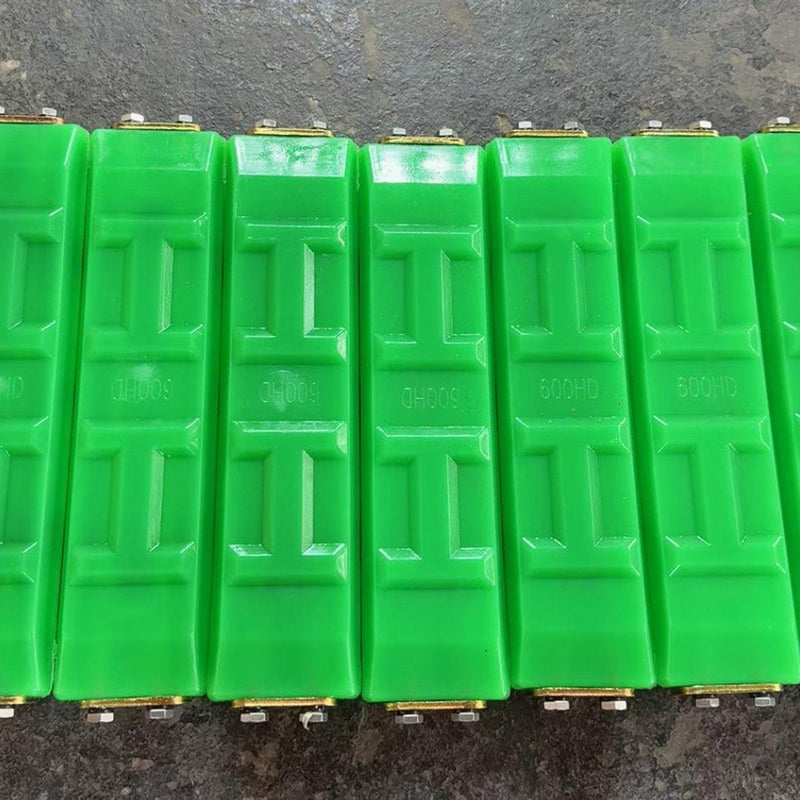
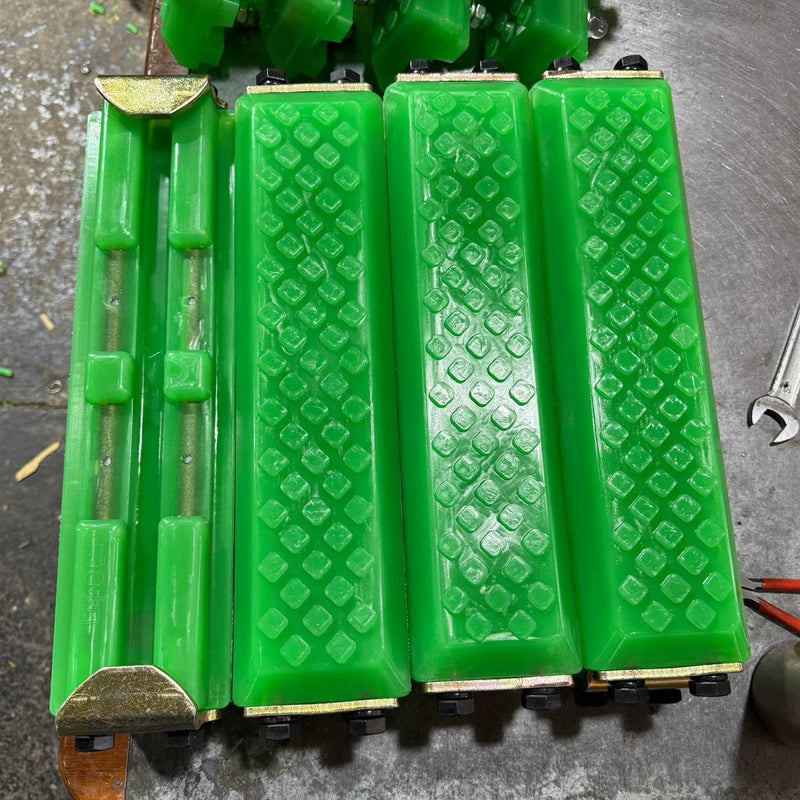
Track pads are often sold individually, but most buyers are planning one of three jobs: replacing a damaged pad, rebuilding one side, or fitting a complete machine. The correct quantity depends on the actual number of steel shoes, not only the excavator model.
Counting before ordering prevents shortages, excess freight and a second period of downtime.
Count the steel shoes on each side
Park the machine safely and mark one shoe with chalk or removable tape. Count each steel shoe until you return to the mark. Repeat the process on the other side rather than assuming both sides are identical.
Do not count the drive sprocket teeth, chain links visible through the side frame, or pads in an online photograph of a similar machine. The required quantity is the number of mounting positions you plan to cover.

Option 1: one or several replacement pads
A small replacement order can make sense when the remaining pads are still in good condition and the replacement has the same size and mounting arrangement. Photograph the existing pad and steel shoe before ordering.
Compare the remaining tread thickness and wear pattern. A brand-new pad beside heavily worn pads may sit at a different height. If many pads are already close to replacement, changing only one can postpone rather than solve the maintenance problem.
Option 2: replace one complete side
Replacing one side may be considered after one track has suffered unusual damage, but investigate why the wear is different. Misalignment, turning habits, debris or a mounting problem can cause one side to deteriorate faster.
Record the quantities and condition on both sides. If the opposite side is also near the end of its usable life, a complete set may reduce repeat downtime.
Option 3: order a complete machine set
For a complete set, add the verified left-side and right-side counts. Keep the counts written separately on the order record so they can be checked before installation.
For example, if a machine has 46 shoes on each side and every shoe will receive a pad, the complete set requires 92 pads. This is only an illustration; count your own machine because configurations differ.
Should you order spare pads?
A few spares can be useful for machines working far from the workshop, fleets using the same pad, or projects where waiting for a replacement would stop work. The practical number depends on operating conditions, storage space and how quickly replacements can be delivered.
Store spare pads away from direct heat, sharp objects and contamination. Keep matching hardware identified with the correct product so parts do not become mixed between sizes.
Mixed fleet and dealer orders
List every machine on a separate line. Include the model, shoe width, mounting style, pad quantity and any spare quantity. Do not combine several 400mm or 450mm machines into one total until the hole pattern or clip arrangement has been checked.
A simple order sheet can include:
| Machine | Shoe width | Mounting | Left side | Right side | Spares |
|---|---|---|---|---|---|
| Machine 1 | Measure | Bolt-on or clip-on | Count | Count | Planned quantity |
| Machine 2 | Measure | Bolt-on or clip-on | Count | Count | Planned quantity |
Confirm compatibility before multiplying the quantity
A correct count does not confirm fitment. First verify the steel-shoe width and mounting arrangement, then calculate the order quantity. This prevents a small measurement mistake from becoming a full-set problem.
Browse the bolt-on range or clip-on range. If you are unsure, send the machine information, track photographs and counts through the VectorMax contact page.