There is no single hour figure that accurately predicts the life of every excavator track pad. A pad on a compact machine travelling short distances over clean concrete has a different working life from one carrying a heavy excavator across abrasive hardstand every day.
The useful question is not “How many hours will it last?” but “Which conditions control wear on this machine?” Once those conditions are known, operators can choose, inspect and maintain pads more effectively.
The six biggest influences on track pad life
1. Machine weight and load
Heavier equipment places more load through each pad. Attachments, carried material and working position can shift that load along the track frame. A product intended for a smaller machine should not be selected only because its width appears close.

2. Surface abrasiveness
Smooth concrete, coarse asphalt, crushed stone and demolition hardstand wear pads differently. Repeated travel over sharp aggregate removes material faster than occasional movement on a clean, even surface.
3. Travel and turning
Long travel distances generate more heat and abrasion. Tight turns create sideways scrub, often producing rounded edges or uneven wear. Wider turns and thoughtful machine positioning reduce unnecessary stress.
4. Fitment
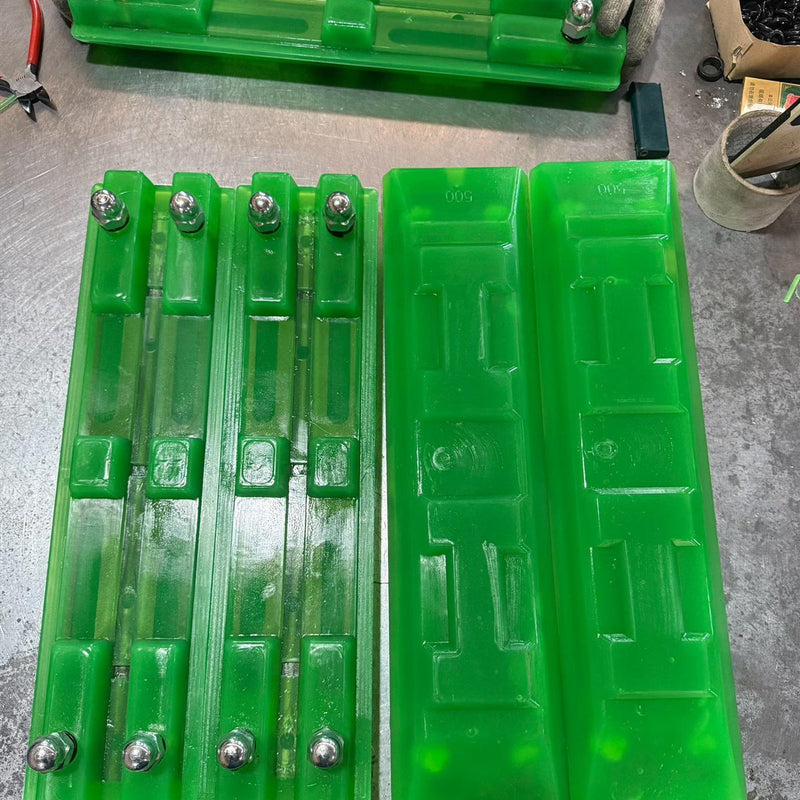
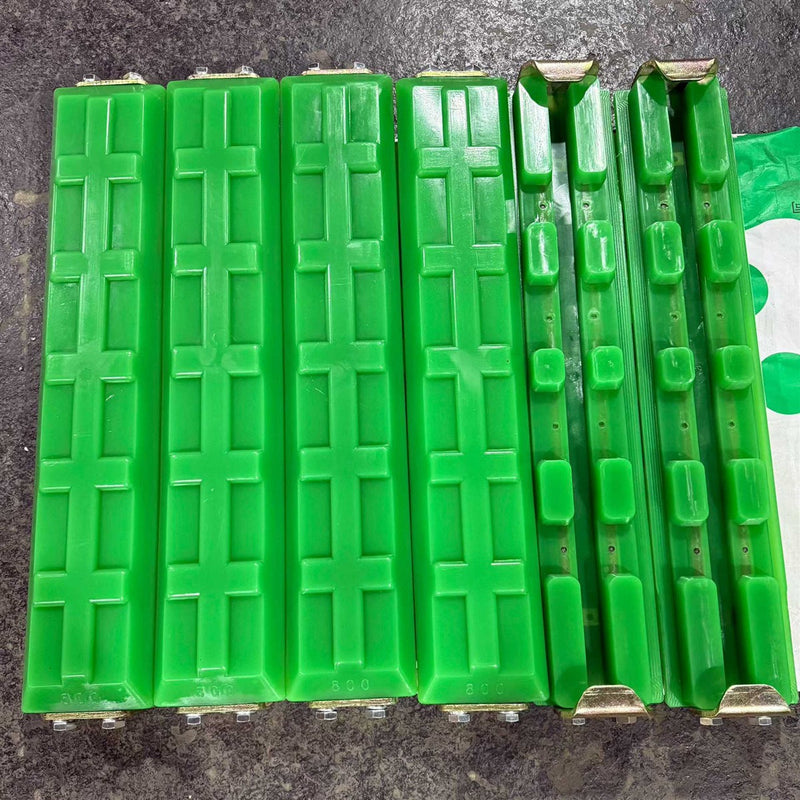
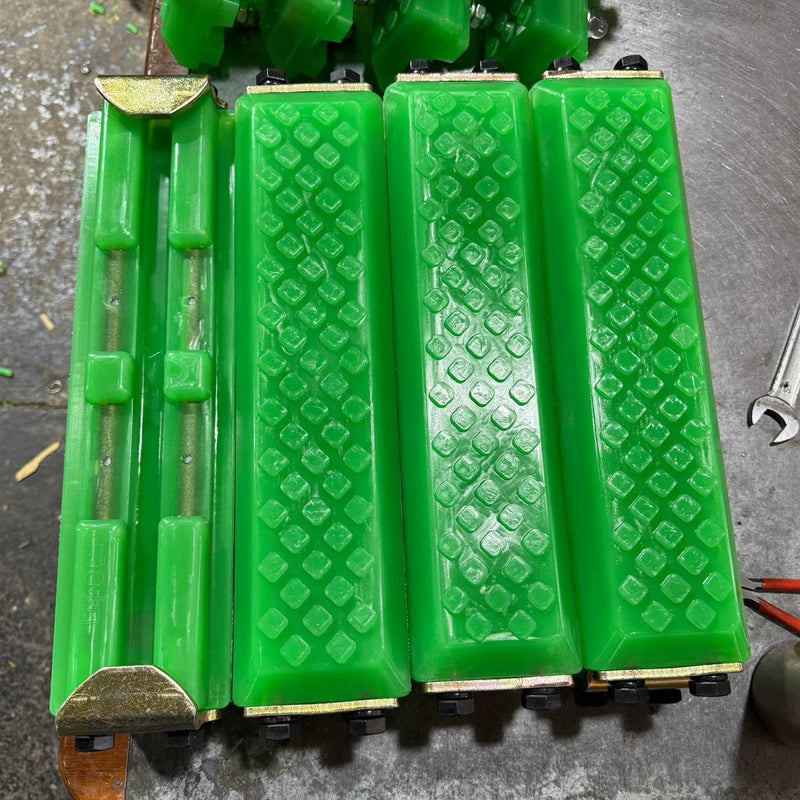
A pad that does not sit correctly can move against the shoe, load its hardware unevenly or contact nearby components. Correct width is only the first check. Bolt holes, clip geometry and mounting clearance must also match.
5. Installation and hardware condition
Loose, damaged or incorrectly installed hardware allows movement. Follow the instructions for the selected pad and machine, then recheck the installation after initial use. Replace damaged mounting components rather than expecting the polyurethane body to hold an unstable connection.
6. Debris and housekeeping
Stones, wire, compacted mud and demolition material can become trapped around the pad. Debris can cut the tread, stop a clip from seating properly or create a high point that concentrates load.
Why polyurethane is used
Many buyers search for “rubber track pads,” but VectorMax pads use polyurethane. Polyurethane is selected for repeated contact with hard jobsite surfaces and for resistance to abrasion, cutting and deformation.
Material quality matters, but it cannot correct the wrong size or poor installation. Long service life begins with a pad that fits the steel shoe and the work.
What normal wear looks like
Gradual smoothing of the tread and a slow reduction in thickness are expected. Wear should be reasonably consistent across pads doing similar work. One pad wearing much faster than the rest deserves attention.
Look for:
- Uneven wear from one edge to the other
- Movement between the pad and steel shoe
- Loose or missing bolts, nuts or clips
- Deep cuts, tearing or exposed reinforcement
- Interference with the chain or undercarriage
- Missing pads that leave an uneven contact pattern
When should a pad be replaced?
Replace a pad when it can no longer remain securely mounted, when wear exposes steel contact, or when damage creates a risk of losing the pad during operation. Do not wait for every pad to fail at the same time.
A single damaged pad may be replaced when the remaining set is in good condition and the replacement is compatible. If many pads are near the end of their usable thickness, repeated single replacements may cost more downtime than replacing a larger group.
A simple inspection routine
Walk around the machine before starting work on finished surfaces. Check that the pads are present, seated and free of sharp debris. During heavy use, look again at breaks and at the end of the shift.
After initial installation, recheck the hardware according to the relevant instructions. Keep a small number of compatible replacements available when a machine works far from the workshop or on a schedule where downtime is expensive.
How to improve working life
- Confirm the steel-shoe width and mounting arrangement before ordering.
- Choose a pad intended for the machine size and application.
- Avoid unnecessary counter-rotation on abrasive surfaces.
- Remove trapped debris before it causes cutting or movement.
- Replace damaged hardware promptly.
- Investigate uneven wear instead of treating it as normal.
If you need help choosing a size, use the measurement guide and send clear track photographs. VectorMax can help compare bolt-on and clip-on options for your machine.