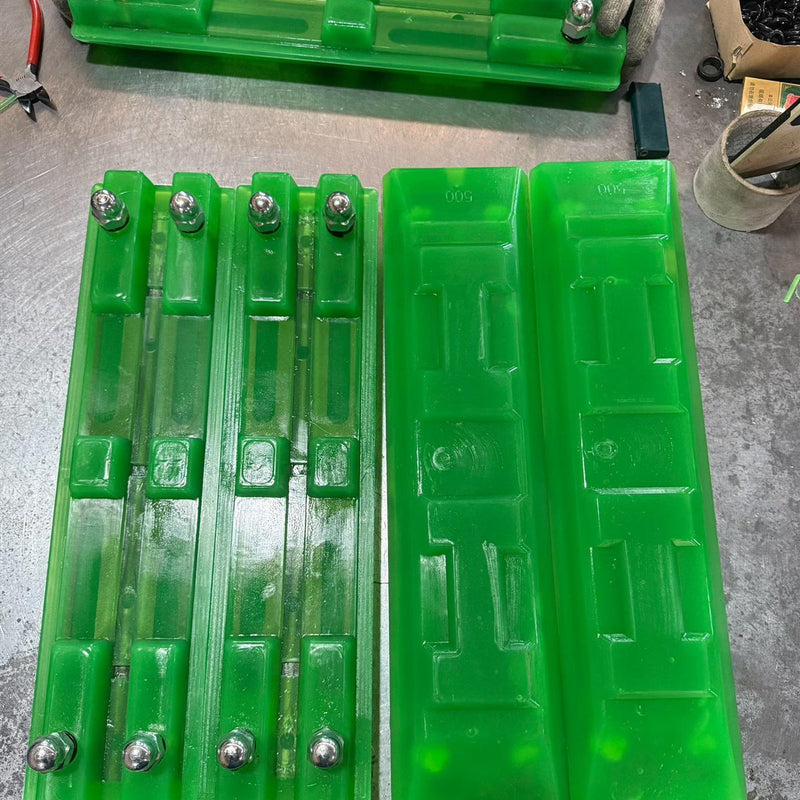
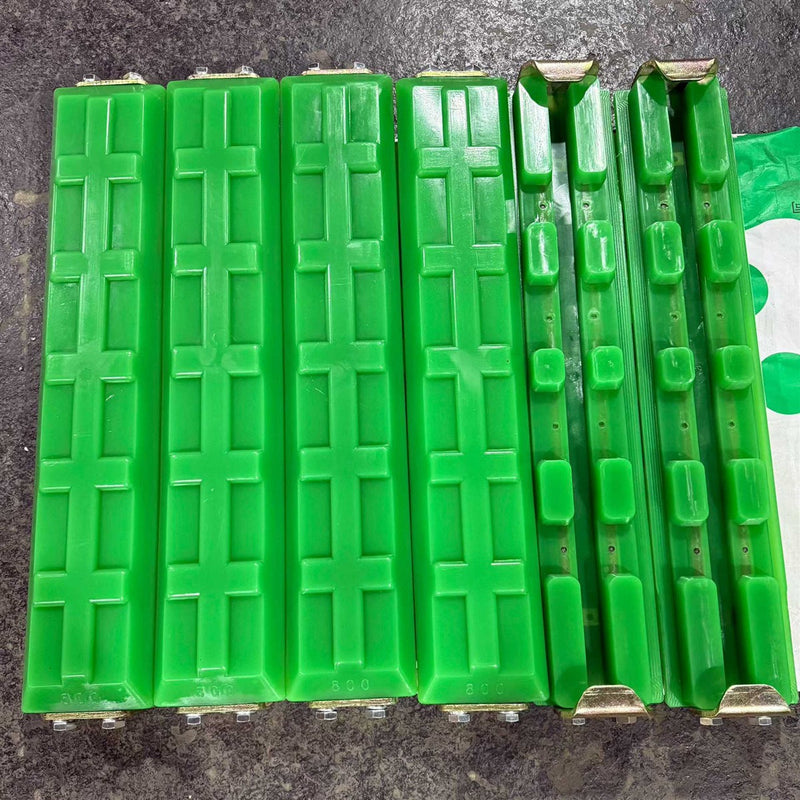
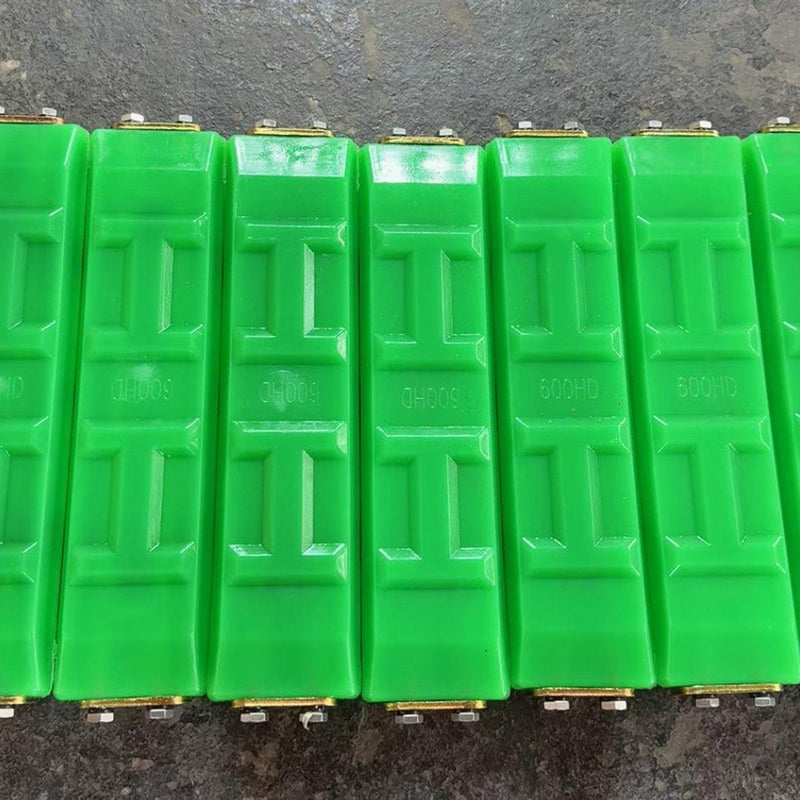
Excavator track pads are commonly fitted when a steel-tracked machine needs to travel or work on asphalt, concrete, paving or other finished surfaces. They place a polyurethane contact layer between the steel shoe and the ground, reducing direct steel contact.
That does not mean every surface becomes impossible to mark. The pad, machine, surface and operator all influence the result. Understanding those limits helps prevent unrealistic expectations and avoidable damage.
What track pads change
Bare steel grousers concentrate machine weight along hard edges. On pavement, those edges can scratch, chip or crush the surface. A correctly fitted pad spreads contact over a broader polyurethane face and cushions some of the impact during travel.
Track pads can also reduce vibration and operating noise compared with steel-on-concrete contact. This is useful on roadwork, utility, landscaping, commercial and residential sites where the excavator moves across completed areas.

Why an excavator can still mark asphalt
Fresh or hot asphalt is softer than fully cured pavement. A heavy machine can leave impressions even when no steel touches the ground. Tight counter-rotation places high sideways force on a small contact area and can scuff the surface.
Debris also matters. A sharp stone trapped in the tread can act like a cutting point. Mud can hide broken material and make inspection difficult. Before entering a finished area, clean the pads and travel path where practical.
The main risk factors are:
- High machine weight on a soft or thin surface
- Tight turns or counter-rotation
- Hot weather and newly laid asphalt
- Sharp stones, scrap metal or demolition debris
- Damaged, missing or incorrectly fitted pads
- Long travel distances at unnecessary speed
Concrete, pavers and warehouse floors
Cured concrete normally resists compression better than asphalt, but its edges, joints and surface finish can still be damaged. Avoid turning on expansion joints, slab corners and decorative finishes. Paving stones can move independently, especially when the base has settled or the joints are open.
For warehouse or workshop floors, consider more than visible marking. Check door thresholds, drains, ramps and floor coatings. A pad that is suitable for exterior concrete may still pick up grit before the machine enters a coated interior floor.
Operating habits that improve surface protection
Plan the route before moving onto finished ground. Use straight travel where possible, make wide gradual turns, and reposition the machine before applying heavy digging force. Avoid spinning one track while the other remains stationary.
Inspect the first few metres of travel. If the surface begins to mark, stop and check the pad condition, debris and turning technique before continuing. This quick check is especially important on warm asphalt and decorative paving.
Choose a pad that matches the work
Bolt-on pads are often suitable when the machine regularly works on paved areas and the steel shoes have compatible mounting holes. Clip-on pads can be useful for machines that move between earthwork and surface-sensitive jobs, provided the grouser profile and clearance are compatible.

Pad condition must also match the job. A severely worn pad provides less material between the steel shoe and the surface. Missing pads create uneven contact and can expose steel edges.
A practical pre-entry checklist
- Confirm every pad is present and properly seated.
- Check mounting hardware and clips.
- Remove sharp debris from the tread.
- Inspect the planned travel route.
- Consider pavement temperature and surface condition.
- Use a slow test pass before full operation.
Can track pads guarantee no surface damage?
No responsible supplier can guarantee that every excavator will leave every surface unmarked. Track pads reduce direct steel contact, but machine weight, operating technique and surface strength remain important.
For the best result, match the pad to the steel shoe, maintain it properly and operate with the surface in mind. Browse bolt-on pads and clip-on pads, or ask VectorMax for fitment help if you are unsure.